
|  |

The word theism is derived from the Greek theos which simply means "God", so at its simplest a theist is someone who believes in some sort of divine being.
The thinker who coined the term theism, Ralph Cudworth, defined people who are theists as those “who affirm, that a perfectly conscious understanding being, or mind, existing of itself from eternity, was the cause of all other things". Cudworth, being a Christian living in the 17th Century assumes in his definition that there is only one God and his definition reflects that assumption. But otherwise it is interesting to note the features of his definition: conscious that is a thinking and reasoning being, eternal not having a beginning or end and cause, it is the reason that other things exist.
There are of many other versions of theism that I would now like to unpack and define quickly:
Monotheism
This is the form of theism that we are most familiar with in the West - belief in a single deity who by extension is normally seen as omnipotent, omniscient etc. This is the form of theism adopted by Zoroastrians, Jews, Christians, Muslims, The Baha’i and Sikhs.
The thinker who coined the term theism, Ralph Cudworth, defined people who are theists as those “who affirm, that a perfectly conscious understanding being, or mind, existing of itself from eternity, was the cause of all other things". Cudworth, being a Christian living in the 17th Century assumes in his definition that there is only one God and his definition reflects that assumption. But otherwise it is interesting to note the features of his definition: conscious that is a thinking and reasoning being, eternal not having a beginning or end and cause, it is the reason that other things exist.
There are of many other versions of theism that I would now like to unpack and define quickly:
Monotheism
This is the form of theism that we are most familiar with in the West - belief in a single deity who by extension is normally seen as omnipotent, omniscient etc. This is the form of theism adopted by Zoroastrians, Jews, Christians, Muslims, The Baha’i and Sikhs.
Polytheism
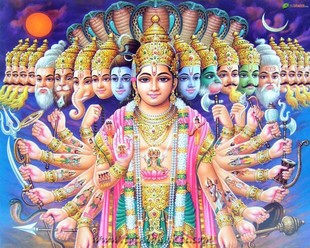
This is belief in many gods, however in reality a number of religions that are called polytheistic are rather “soft” on this matter and often really believe that there is one God who is represented in many forms. A good example of soft polytheism is Hinduism.
There were are are hard polytheists such as Romans, Norse, Celts, Egyptians etc. These traditions recognised many distinct deities and were often open to the idea that gods worshiped by other cultures were as real a their gods were.
This is belief in many gods, however in reality a number of religions that are called polytheistic are rather “soft” on this matter and often really believe that there is one God who is represented in many forms. A good example of soft polytheism is Hinduism.
There were are are hard polytheists such as Romans, Norse, Celts, Egyptians etc. These traditions recognised many distinct deities and were often open to the idea that gods worshiped by other cultures were as real a their gods were.

Pantheism
This is the belief that everything is part of the divine and that the physical universe is equivalent to God. This means that there is no distinction between the creator and the creation and many philosophers have struggled with the logic of this notion.
This is the belief that everything is part of the divine and that the physical universe is equivalent to God. This means that there is no distinction between the creator and the creation and many philosophers have struggled with the logic of this notion.

Deism
Classical deism is the belief that a god or gods must have caused the world to come into existence but no longer participate in and contribute to the universe - this is an attractive view to some as it means there are no supernatural events such as miracles, prophecies etc., evil in the world is more easily explained and yet there is a first cause. The most famous deist from ancient philosophy was Aristotle who proposed that there must be a necessary being that he termed the prime mover.
Classical deism is the belief that a god or gods must have caused the world to come into existence but no longer participate in and contribute to the universe - this is an attractive view to some as it means there are no supernatural events such as miracles, prophecies etc., evil in the world is more easily explained and yet there is a first cause. The most famous deist from ancient philosophy was Aristotle who proposed that there must be a necessary being that he termed the prime mover.
Henotheism
Heno means one and so henotheism is belief in one God and yet acknowledging that other gods exist - so they have a specific affiliation and loyalty to one god over the others. A good analogy would be that you know all other premiership rugby teams exist but you only support Saracens (the best one!). This is also known as Monolatrism.
It seems likely that the early Jewish religion was like this and that the Hebrews worshiped Yahweh (most of the time, when it suited them!) over other gods. This of course meant that when things went wrong or or they were tempted away they also worshipped other gods such as Baal.
Heno means one and so henotheism is belief in one God and yet acknowledging that other gods exist - so they have a specific affiliation and loyalty to one god over the others. A good analogy would be that you know all other premiership rugby teams exist but you only support Saracens (the best one!). This is also known as Monolatrism.
It seems likely that the early Jewish religion was like this and that the Hebrews worshiped Yahweh (most of the time, when it suited them!) over other gods. This of course meant that when things went wrong or or they were tempted away they also worshipped other gods such as Baal.

Misotheism
Misotheism is the belief that God(s) exist but that they are evil and so not worthy of worship - in some cultures such as the Icelandic belief system this was seen as a method of punishing the god(s)! Kind of like a divine form of being sent to Coventry!
So theism has much more to it than meets the eye but what ever the form has the notion that our existence is reliant upon the god(s), that the god(s) are of a different order/substance/essence to us.Those who believe this to not be the case are of course atheists - but we will have to save that for another word of the week...
Misotheism is the belief that God(s) exist but that they are evil and so not worthy of worship - in some cultures such as the Icelandic belief system this was seen as a method of punishing the god(s)! Kind of like a divine form of being sent to Coventry!
So theism has much more to it than meets the eye but what ever the form has the notion that our existence is reliant upon the god(s), that the god(s) are of a different order/substance/essence to us.Those who believe this to not be the case are of course atheists - but we will have to save that for another word of the week...
Footnotes:
Cudworth, Ralph (1678). The True Intellectual System of the Universe, Vol. I. New York: Gould & Newman, 1837, p. 267.
Cudworth, Ralph (1678). The True Intellectual System of the Universe, Vol. I. New York: Gould & Newman, 1837, p. 267.
 RSS Feed
